The Most Beautiful Empty Board I’ve Seen
A few sticky notes. Three simple columns. And an empty Kanban board that became surprisingly satisfying to look at. Do you know, sometimes the clearest measure of progress isn’t a report card.
Six Words That Made My Day
I had been working with Agile concepts for years. However, preparing for PMI-ACP did something interesting to me.
- Kanban boards.
- Sprints.
- Retrospectives.
Suddenly, they weren’t just workplace concepts anymore. In everyday life. And surprisingly… at home.
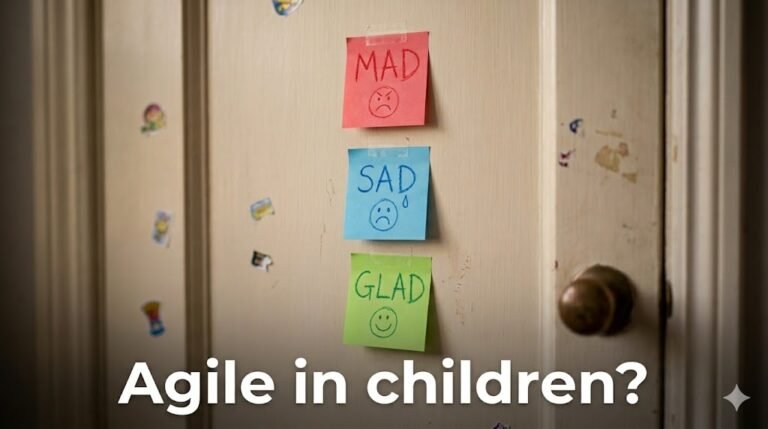
After seeing how the “Mad, Sad, Glad” retrospective helped spark meaningful conversations with my him, I couldn’t resist introducing another Agile practice.
This time, it wasn’t about emotions.
It was about surviving exam season. “The Kanban” Way 😊
At one point in time, he had a growing list of homework, revision topics, reading assignments, and extracurricular activities. As exams approached, the list seemed to grow longer by the day.
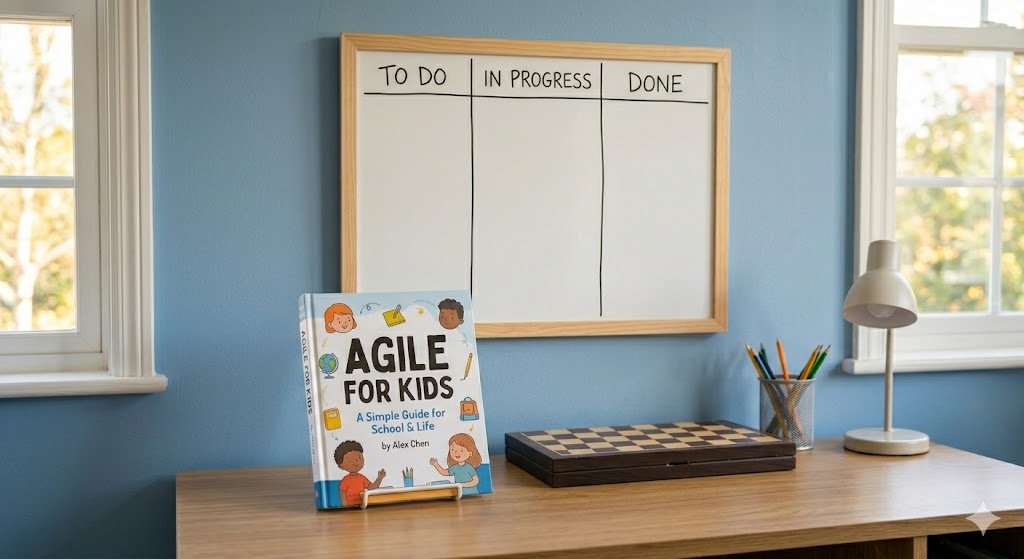
Here comes the Kanban Board
Instead of creating a complicated study plan, I introduced a simple Kanban board with three columns:
- To Do
- In Progress
- Done
That was it.
No fancy apps.
No AI.
No automation.
Just a board and complete tasks.
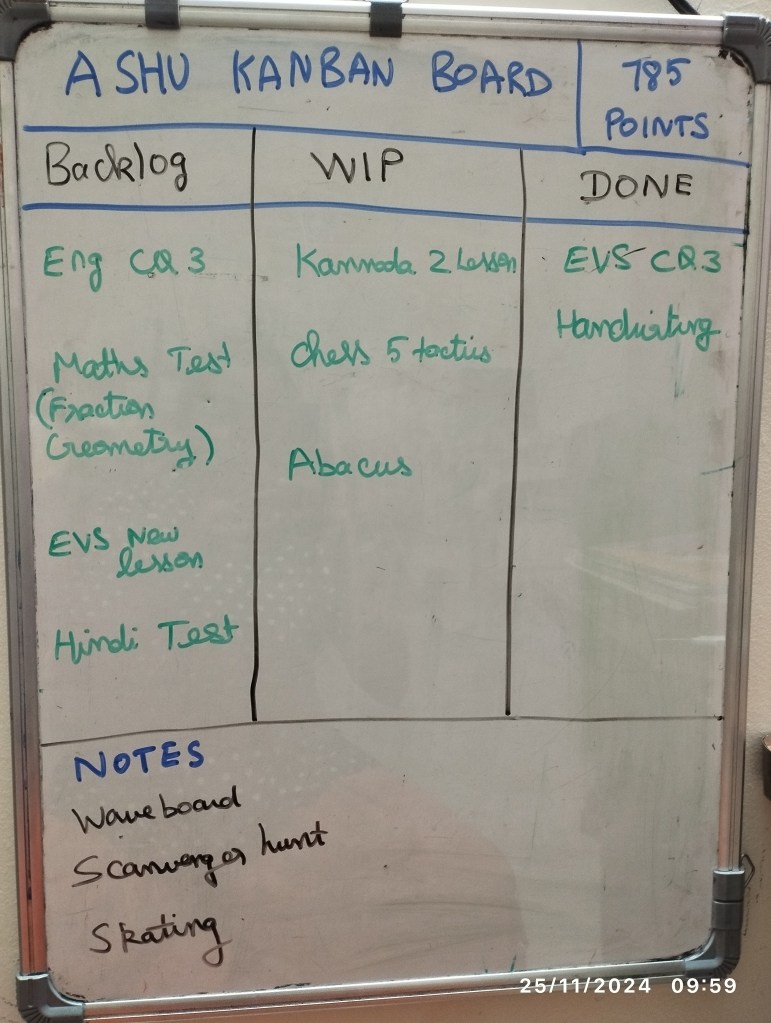
Every task started in “To Do.” As work began, it moved to “In Progress.” Once completed, it proudly earned its place in “Done.”
At first, it felt like just another board on the wall.
But something interesting happened. Over time, writing and erasing tasks became tedious for him.
It became another task for him. So I started to use sticky notes. The colorful sticky notes made magic.
The board started doing what parents often struggle to do. It made progress visible.
Who knew a few sticky notes could achieve what repeated parental reminders couldn’t?
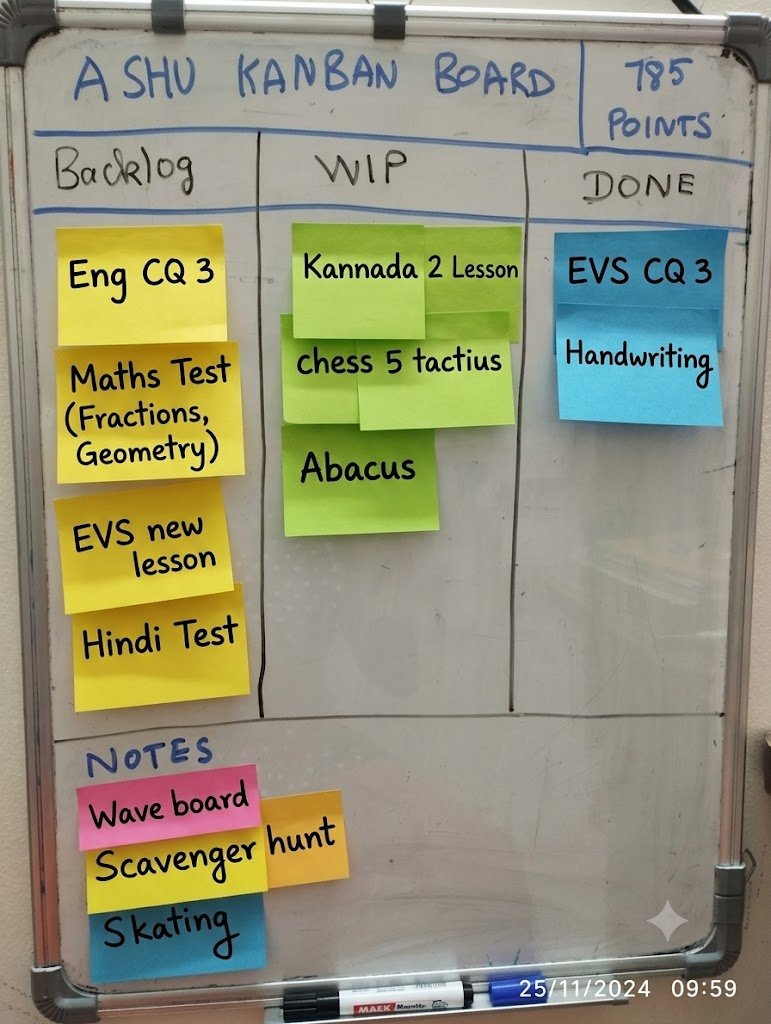
Instead of hearing “I still have a lot to study,” we could actually see what was left.
Large subjects became smaller tasks. Sticky notes were easier than writing
And there was something surprisingly satisfying about moving a sticky note from one column to another.
As the days passed, the “To Do” column shrank. One sticky note at a time. The “Done” column grew.
The “Done” column turned out to be far more motivating than any motivational speech I could have given.
Then exam season ended.
I walked past the board and stopped.
It was completely empty.
No pending tasks.
Nah, no revision plans.
Absolutely No reminders.
Nothing.
Just a clean board.
Every sticky note moved to “Done” felt like a mini project closure ceremony for him. By the end, he was ready for a celebration party.
Some people celebrate project go-lives. We celebrated an empty Kanban board.
I believe Agile should be taught early to children. Children may not understand Agile terminology, but they understand the happiness of moving a task to ‘Done.’
Twist in the plot
Wait, there is a twist in the story.
As months passed and school chapters became longer and more complex, maintaining the board slowly became a task in itself. Like many good habits, it quietly faded away.
The Kanban board disappeared. Sticky notes disappeared. The routine disappeared.
By the end of 2024, the board was no longer part of our daily life.
I didn’t think much of it. Until I started noticing something else.
Chess practice was being skipped.
Football sessions became irregular.
Story-writing activities that he once enjoyed were slowly pushed aside.
Nothing dramatic. Just the gradual accumulation of unfinished intentions.
One evening, while just casually mentioning how he’d been missing his favourite activities, without missing a beat, he replied
“Mom, let’s start the Kanban board again”. I wasn’t expecting that answer. For a moment, I just smiled. Because those words told me something important.
The board hadn’t been about sticky notes. It hadn’t been about Agile. It hadn’t even been about exams.
Somewhere along the way, he’d figured out what actually helped him – seeing his tasks, and finishing them one at a time.
And when he felt that structure missing, he knew exactly what had helped before.
Those six words completely made my day.
Maybe Agile should be taught early to children after all. Not because they need to learn Kanban boards.
But because one day, they might realize for themselves when they need one.
Kanban Board – Key Takeaways
- Large goals become less overwhelming when broken into smaller tasks.
- Progress becomes less stressful when it is visible.
- Success is rarely one giant leap. More often, it’s a collection of sticky notes moving steadily toward “Done.”
A Few Things I Learned
What gets visualized gets managed. What stays in the head usually stays forgotten. Children are far more willing to move sticky notes than listen to lectures. Children don’t always need more reminders; sometimes they just need a better system. Breaking large tasks into smaller pieces makes even exam preparation feel less intimidating. Progress is motivating when it can be seen, not just talked about.
Check out more personal stories here