What Happens When Workplace Perception Enters Before You Do?
What happens when you are highly collaborative, constantly helping others, and sharing knowledge freely… yet people still believe you are difficult to work with?
Managing Workplace Perception: Necessary… But Not at the Cost of Your Peace. Workplace success can feel simple. Do good work. Be sincere. Help others. Deliver results. And yes… make sure people know about your work too. Simple… right? At least, that’s how it looks on paper. But experience often teaches something uncomfortable
Sometimes your biggest challenge isn’t the workload, deadlines, difficult stakeholders, or even office politics. Sometimes, it’s the perception someone creates about you before people even get to know you.
If you’ve ever been on the receiving end of a false workplace perception, you might relate to what happens next.
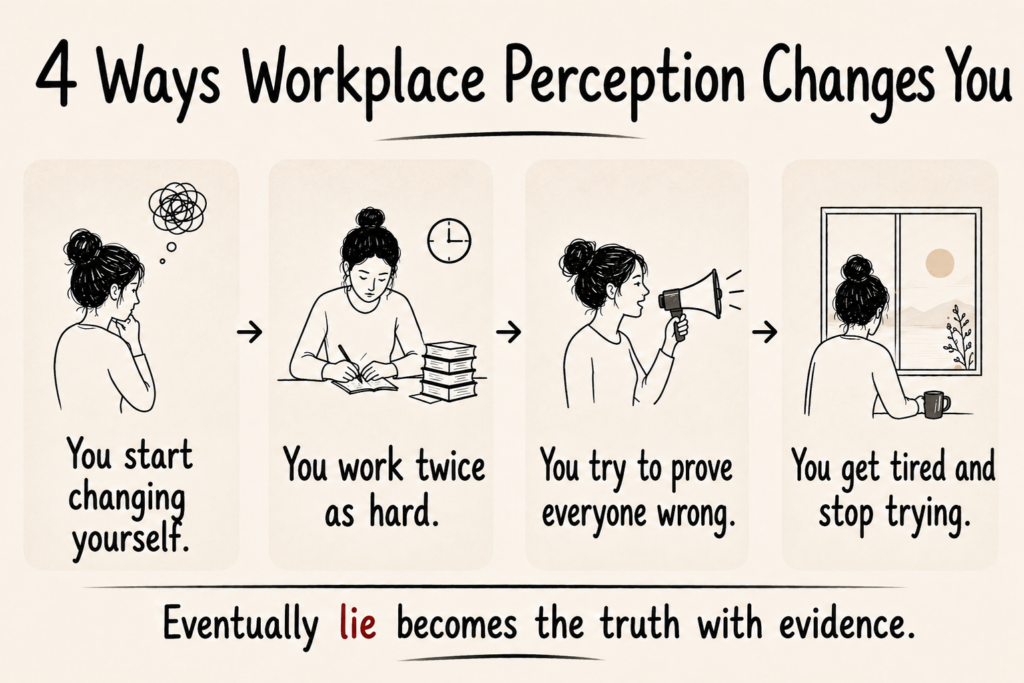
Slowly, you start changing yourself.
Then you overcompensate to prove everyone wrong.
Somewhere along the way, your job becomes doing the work and defending your reputation at the same time.
And if that goes on for long enough, you eventually become so tired that you stop proving yourself altogether.
That’s probably the part nobody talks about, and that’s exactly what I want to share.
Managing Workplace Perception Isn’t Always About the Truth
Managing workplace perception isn’t always about the truth. Sometimes it’s simply about who tells the story first.
And sadly…The first version people hear often becomes their truth.
Imagine spending weeks solving problems, supporting teammates, sharing ideas and doing all the invisible work that keeps projects moving. You know the effort you’ve put in. You know the value you bring.
But before someone has even worked with you, a story has already been written.
“She doesn’t collaborate.”
“She never shares knowledge.”
“She’s difficult to work with.”
It’s always who tells the story first!!!
When the Label Comes Before the Person
One experience will stay with me for years.
The perception was created by my manager that I’m an intimidating person, the very first day.
Looking back, the first 8 months were some of the hardest in my career. Almost every day felt stressful. What hurt the most wasn’t the workload. It was watching people with far less experience, and sometimes even freshers, treat me in ways I had never imagined I would experience in a professional workplace.
I even remember, because the perception spreads too fast, in the beginning of the year in this company, no one even sit near me.
I used to feel to crying from the top of the mountain saying, “I’m not that kind of person”.
There were days when I was expected to support them, solve their problems, and even take on their work beyond my own responsibilities.
Their behaviour towards me often felt intimidating. Yet somehow, it was always my reaction that was questioned, never what led to it.
The hardest part was that it never felt like an individual issue. When people believe they have the support of someone in authority/power, they naturally become more confident in how they behave.
And when you’re the only person standing on the other side, proving yourself becomes almost impossible.
Over time, the constant pressure, anxiety, and frustration started changing me. There were moments when my frustration showed.
When you’re on the receiving end for long enough, something starts changing inside you. You become defensive. You become guarded. Sometimes the frustration you’ve been holding in finally comes out.
The irony is that the moment you react, that reaction becomes evidence for the very perception you were trying to disprove.
People don’t always see what happened before that moment. They don’t see the months of pressure, the constant anxiety, or the repeated experiences that slowly pushed someone to the edge. They only see the reaction. The worst part is
And that’s the question I’ve often asked myself.
Who was intimidating first?
The person who finally reacted after months of feeling cornered?
Or the environment that slowly created the conditions for that reaction?
I still don’t have a perfect answer.
But I do know this.
Sometimes a perception isn’t just created by one conversation. It’s reinforced little by little until even your natural reactions begin fitting the story that was written about you.
The Invisible Damage of Managing Workplace Perception
The hardest part about managing workplace perception is that the damage is almost invisible.
Trust starts to change. Respect starts to change. People’s behaviour toward you shifts, and doors quietly start closing, sometimes without you even noticing at first. Slowly, people begin treating you based on a story they heard, not on their own actual experience with you
That’s what makes a false perception so dangerous.
It doesn’t just change how people see you. It slowly changes how they treat you.
And after a while…It starts changing how you see yourself too.

The Worst Part… You Slowly Start Changing Yourself
This is probably the part nobody talks about.
Without even realising it, you slowly begin changing yourself to match someone else’s perception.
You think twice before speaking.
You over-explain things that never needed explaining.
You become extra careful with every email.
You keep saying yes because you don’t want another label.
Somewhere along the way…
You start editing your own personality.
Not because there was anything wrong with it.
But because you’re trying to fit into a version of yourself that someone else created. That’s probably the biggest loss of all.
One day you realise something. It’s not enough to just do good, impactful work. You’re also constantly trying to prove you’re not the person that perception painted you as. And somewhere along the way, those became two separate jobs.
The Overcompensation Trap
This happens more often than people realise.
To prove they collaborate, they start saying yes to almost everything.
To prove they’re helpful, they end up sharing far more than anyone ever asked.
Somewhere along the way…
They aren’t helping because they want to.
They’re helping because they’re trying to disprove a perception.
To disprove one perception, they end up sharing 200% of their knowledge for free.
Think about that.
The more they give…
The more people expect.
Respect doesn’t increase.
Dependency increases.
And that’s where another irony begins.
The same people who call someone “non-collaborative” suddenly remember them whenever work becomes difficult.
Need a creative idea?
Need someone to unblock an issue to get free knowledge?
Need a helping hand to offload your work!!?
Suddenly…They’re the first person everyone reaches out to.
Funny… isn’t it?
And this is where it slowly starts taking a toll.
At first, it doesn’t feel like much.
You tell yourself,
“I’ll just help a little more.”
“I’ll explain myself one more time.”
“Maybe this time they’ll understand.”
But after months… sometimes years… you realise something.
You’re no longer working just to create impact.
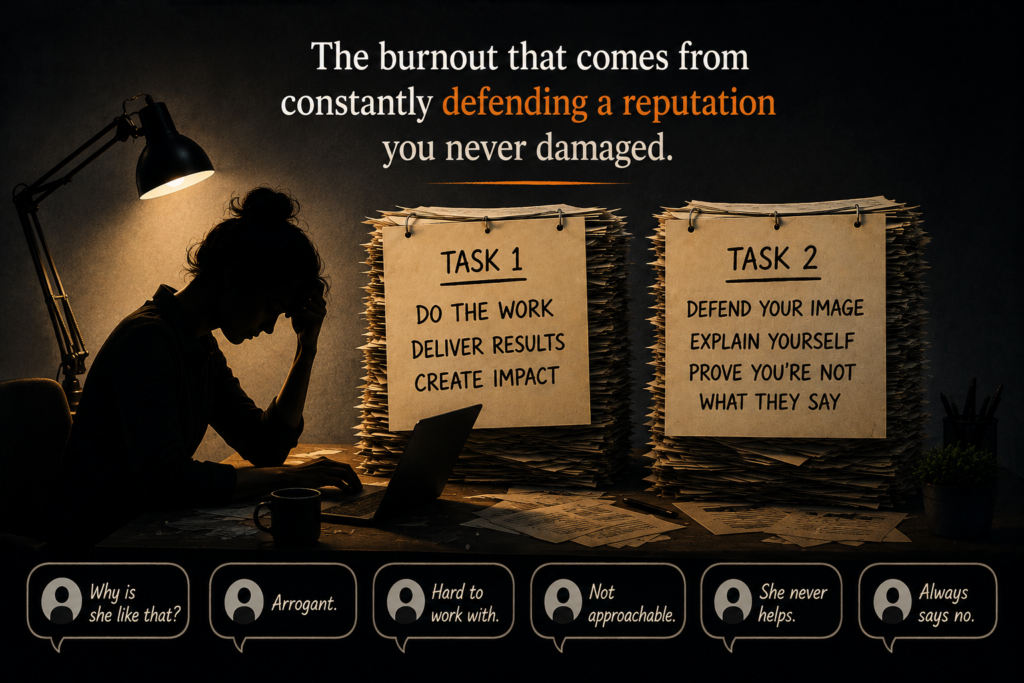
You’re working to defend a reputation.
That’s when burnout quietly enters – The burnout that comes from constantly defending a reputation you never damaged.
When Your Job Becomes Defending Your Reputation
At some point, people stop working to create impact. They start working to defend their reputation.
Every meeting feels like another chance to prove something. Every email gets written and rewritten because you don’t want it to sound rude. Every conversation gets analysed afterwards. “Did I say too much?” “Did I sound arrogant?” “Did they misunderstand me again?” It becomes exhausting. Not because the work is difficult. But because your mind is doing two jobs at the same time.
One…Doing the actual work.
The other…Constantly worrying about how that work will be perceived. That mental load quietly steals your energy. Not overnight. Not in a week. It happens slowly. Before you even realise it, you’re emotionally tired long before you’re physically exhausted. That’s probably why burnout isn’t always caused by having too much work.
When You Finally Stop Proving Yourself
There’s one more stage that nobody really talks about.
After days… sometimes months..years… you simply get tired. Not tired of the work. Tired of constantly proving who you are.
You stop volunteering. You stop explaining. You stop speaking up every time. You stop sharing freely…..You stop helping freely…Not because you don’t care anymore, but because you’ve run out of energy.
And that’s where the irony begins. People don’t see the exhaustion.
That’s when they WON. As they have sufficient evidence you prove their perception.
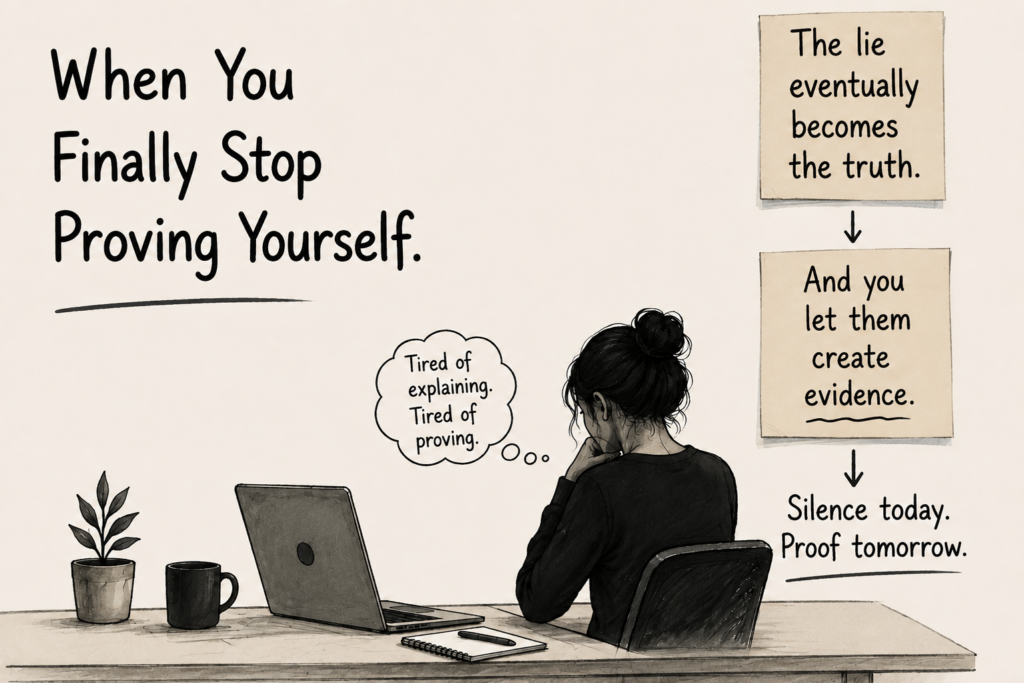
Looking back, I think that’s probably the cruelest part of managing workplace perception. Sometimes a false perception becomes reality, not because it was true, but because you STOPPED proving yourself!!
A Lesson from Vikram Vedha
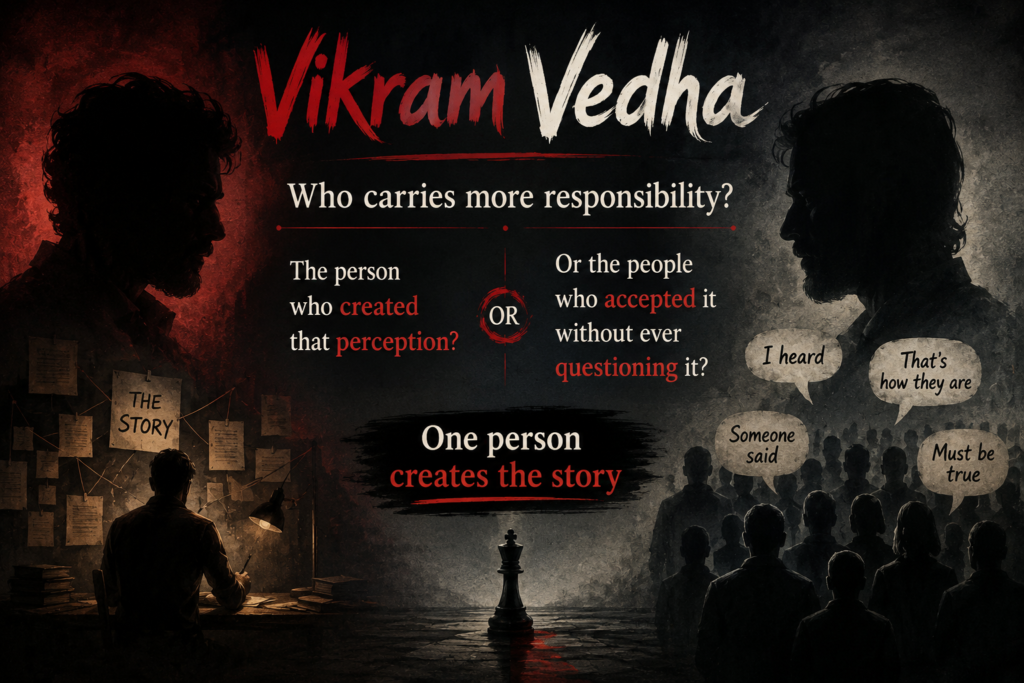
This brings up one question from Vikram Vedha.
If a murder happens…
Who is more guilty?
The person who committed it?
Or the person who ordered it?
There isn’t an easy answer.
And strangely..
Workplace perception raises the same dilemma.
If someone’s reputation gets damaged because of a false perception…
Maybe because of bias.
Maybe insecurity.
Maybe fear.
Maybe jealousy.
Or maybe simply because they wanted control.
Then others hear it.
Believe it.
Repeat it.
Add their own interpretation.
Before you know it…
People who’ve never actually worked with you have already formed an opinion.
So who is responsible?
Honestly, there isn’t a simple answer
One creates the narrative.
Others give it power.
And together…
Perception becomes reality.
Key Takeaways- Protect Your Peace Too
The real lesson here is this- managing perception matters, visibility, communication, and how you represent yourself all genuinely count, but perception management can’t become the whole job.
Focus on being consistent, let your work speak over time, and don’t let a false perception force you into two extremes –accepting a label that isn’t yours or constantly overbending yourself to prove it wrong.
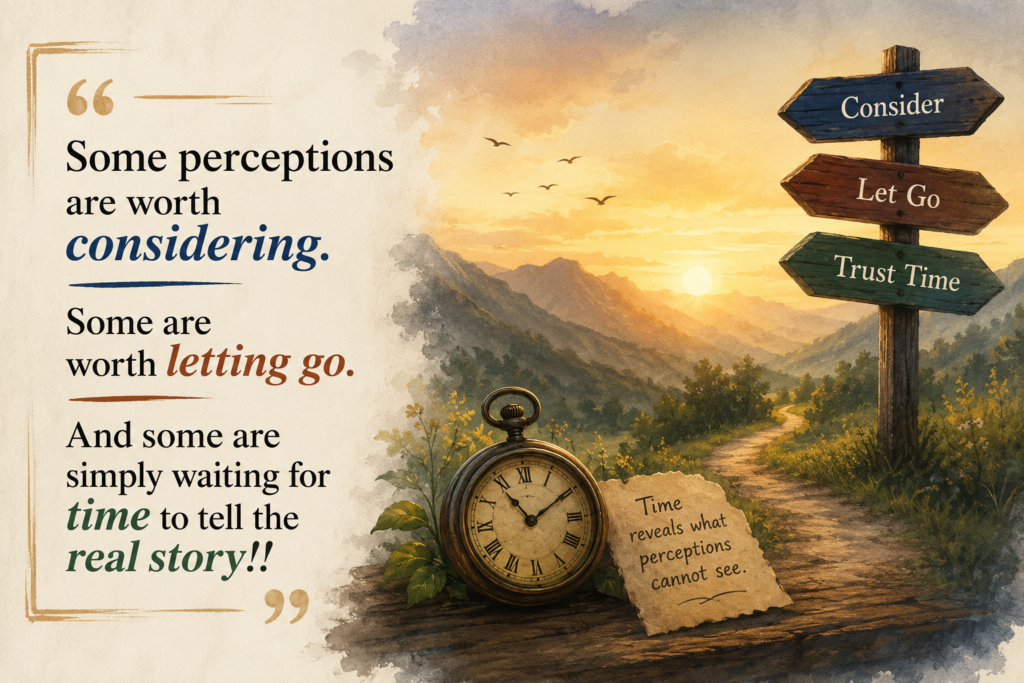
Real wisdom might just be knowing the difference between a perception worth correcting, and one worth letting go of – peace begins that day.
Even i remember while working in this organisation, every time this Manager criticise me, name and shame me, intimidate me with the help of juniors, I used to go and learn something new. I kept on upgrading myself everytime he did, out of anger and frustration.
Over a period of time, I became so confident in myself and ignored all the noises.